Attractions of Trinidad
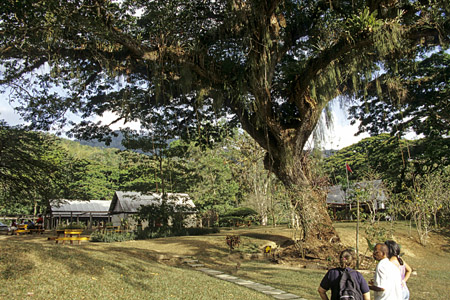
The beautiful and fascinating countryside of Trinidad is yours to enjoy. In a short distance from our guest house are majestic forests, misty mountain tops reached by cool, winding paths, murky swamps, eerie caves and open grassy savannas. And all around there is the magnificient coastal scenery of cliffs and headlands, sparkling sands and rolling surfs. You have the choice of over 30 nature trails. Let us help you to see the unique nature of Trinidad. Here is a short description of some attractions close to our guest house.
Asa Wright Nature Centre
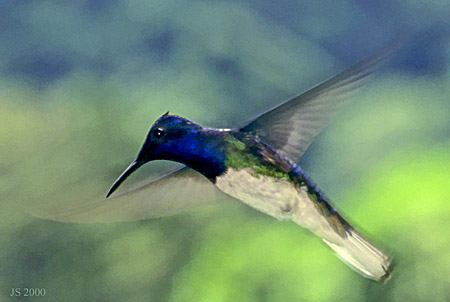
A refreshingly cool seven mile drive through the lush greenery of the Northern Range brings you in direct contact with over one hundred and fifty (150!) species of birds at Asa Wright Nature Centre.

Caroni Bird Sanctuary
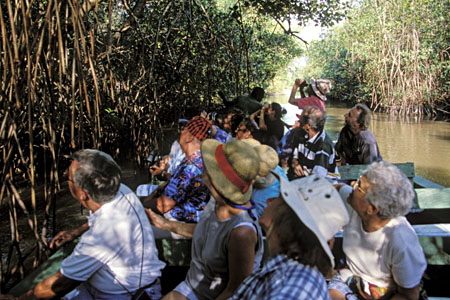
You can see the national bird , the Scarlet Ibis, by the hundreds along with other species at the Caroni Bird Sanctuary. There are also caimans , snakes and fish. A dream place for birdwatchers.
Maracas Bay
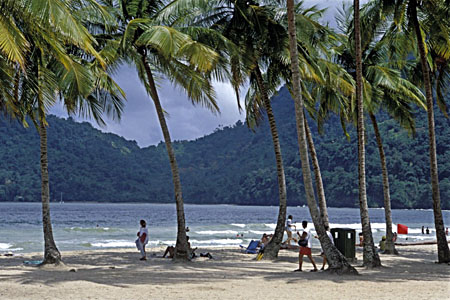
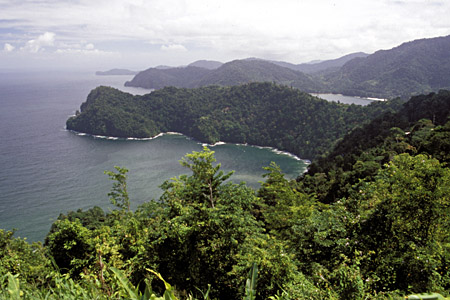
The views are beautiful and breathtaking as you wind your way over the Northern Range to Maracas Beach, one of the more popular beaches in Trinidad. You can excite your appetite here with a tasty "bake 'n shark", which is a Trinidadian native dish that consists of deep-fried shark stuffed in a pocket of deep-fried batter, called "Bake".
Manzanilla Beach
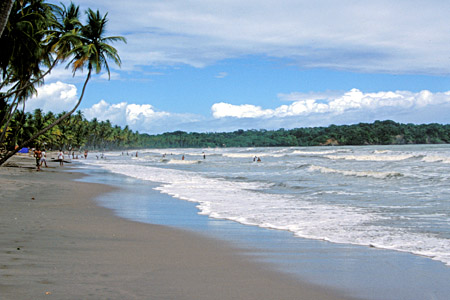
The eastern coastline of Trinidad is rather wild, almost untouched by man. Manzanilla Beach is about 17 miles long, hemmed with tall coconut trees, swaying in the constant breeze. Close by is aforrest with wild monkeys.
Mayaro Beach
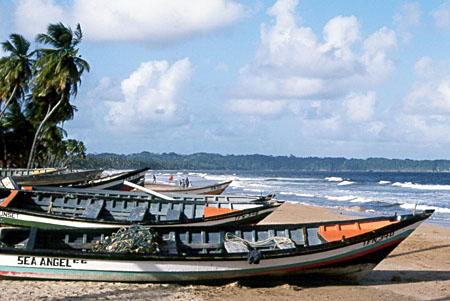
Mayaro Beach on the east coast is a popular destination for holidays, long weekends, and is one of the traditional places to spend the Easter holidays. There is an almost uninterrupted line of coconut trees on the shore, testimony to the days when most of the area consisted of coconut plantations.
Pitch Lake
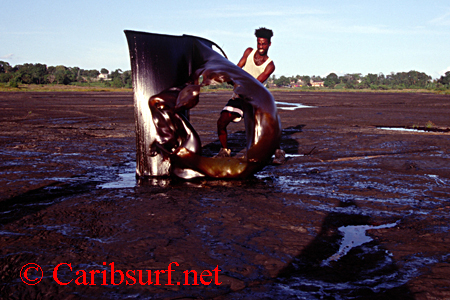
The Pitch Lake is the largest natural deposit of asphalt in the world, located at La Brea in southwest Trinidad. It has fascinated explorers, scientists and the common folk since its discovery by Sir Walter Raleigh in the year 1595. The lake covers about 40 ha and is reported to be 75 m deep. It is mined for asphalt which is exported for high-quality road construction.
Port-of-Spain
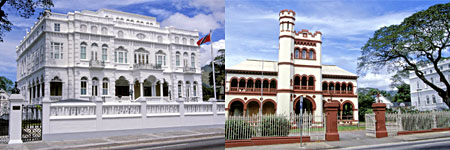
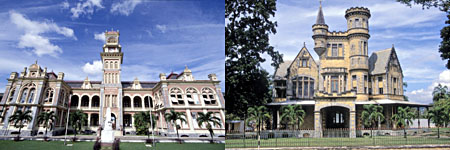
The pulse of the city is Independence Square - not really a square at all, but rather two long streets bordering a narrow pedestrian strip. The city is crowned by Queen's Park Savannah, once part of a sugar plantation and now a public park with a race track. Along its west side is the Magnificent Seven, a line of seven fancy colonial buildings, including Stollmeyer's Castle, built to resemble a Scottish castle complete with turrets. North of the Savannah are the Royal Botanic Gardens and the Emperor Valley Zoo.
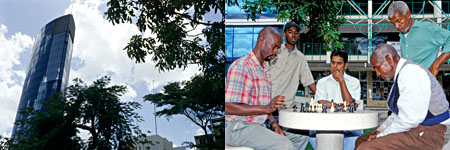
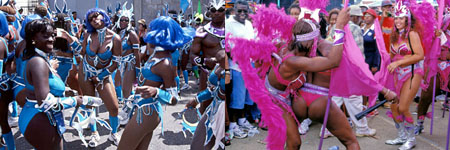
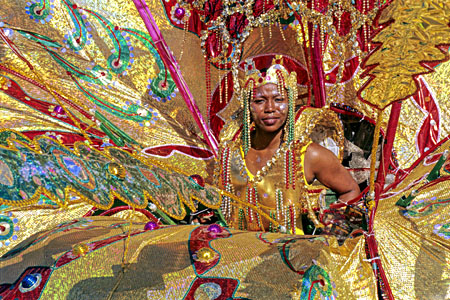
Port of Spain is also famous for its Carnival held all over the city every year.
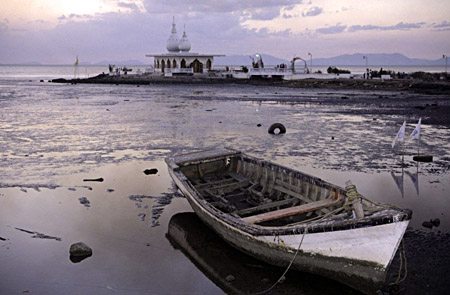
Waterloo Temple in the Sea
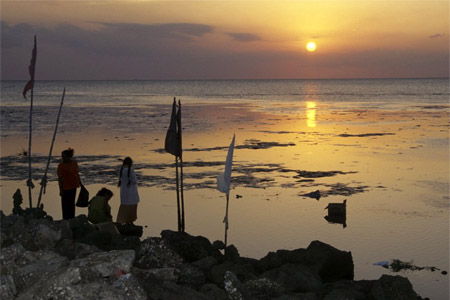
The original temple was built single handedly from mud and stone in the calm shallow waters of the Gulf of Paria by an Indian labourer, Siewdas Sadhu , whose statue stands in the car park of the rebuilt temple. You can capture a magnificent sunset on film while you view the Northern Range across the Gulf of Paria.
Turtle Watching
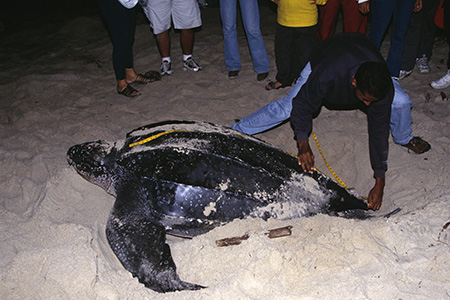
Experience the wonder of seeing the endangered species of the leatherback turtle as it emerges on the beach to lay its eggs.
Spring Bridge in Blanchisseuse
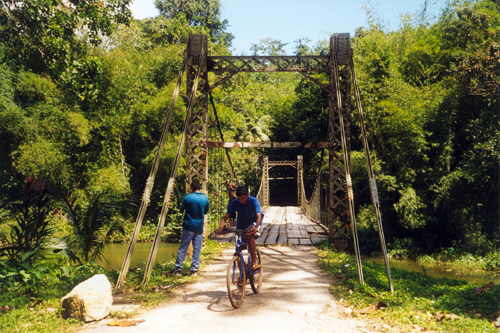
One of the oldest constructions in the remote fishing village on the north coast. Great fun for all to walk across or from which one can dive into the river.
Lopinot
North of Arouca, in the foothills of the Northern Range, at the very top of the scenic Lopinot Valley, lies a beautiful and unspoilt village. It is rich in culture, history and wildlife. It also contains one of Trinidad's best kept national parks, the Lopinot Historical Site. It was here where the French Army General, the Comte Charles-Joseph de Loppinot, settled in the 18th century. He came to Trinidad with his wife, children and about one hundred slaves. Loppinot used the cashew tree which stood on the grounds as a "hanging tree" for the slaves and imprisoned them underneath the cocoa house.
Waterfalls
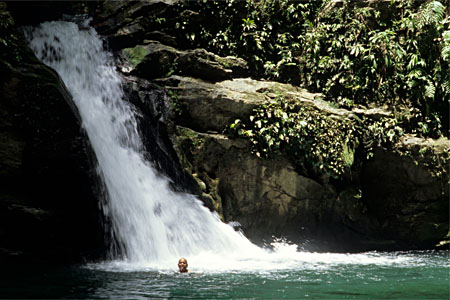
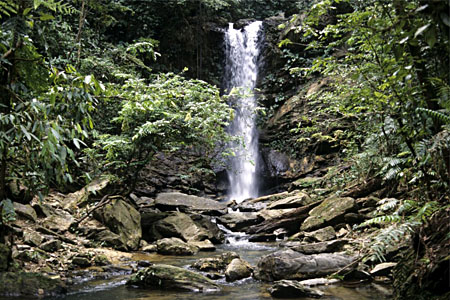
There are many waterfalls in the northern range. Great picnic areas and great pleaces for a swim..
Steelpan Bands
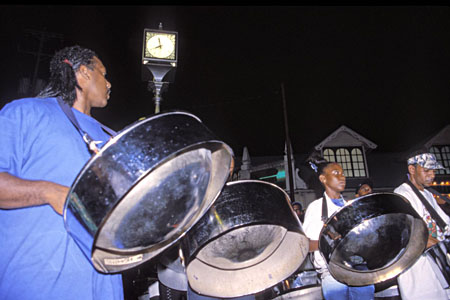
Steelpan is a musical instrument and a form of music originating from Trinidad. The pan is a pitched percussion instrument, toned chromatically, made from a 55 gallon drum of the type that stores oil. Steelpan musicians are called pannists. Arima is home of serveral steelbands.
Parang
Trinidad is best recognized as the land of Calypso and Steelpan, however during the Christmas season, the music is Parang. Parang is an upbeat Venezuela-Trinidad hybrid. The word comes from the Spanish word know as "parranda" (action of merry making, group of serenaders). In Trinidad it refers to folkloric music of Hispanic American origins. Arima is the home of Parang.
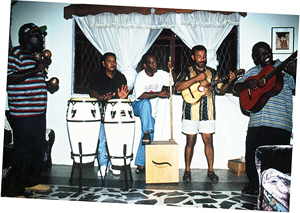
Christmas
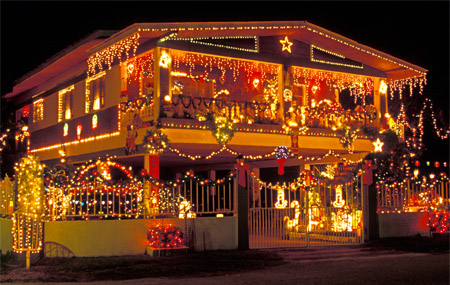
Christmas is a very social time in Trinidad with most people having parties. The radio stations play Trinidadian Christmas carols and also Parang. Both children and adults go from house to house between neighbours and relatives for food and drink. Trinidadian Christmas fruitcake is traditional and is eaten in most homes. The fruits in the cake are usually soaked in cherry wine, sherry and rum for several months before Christmas! Most people paint and make repairs to their houses and hang new curtains and decorations (especially lights) for Christmas.
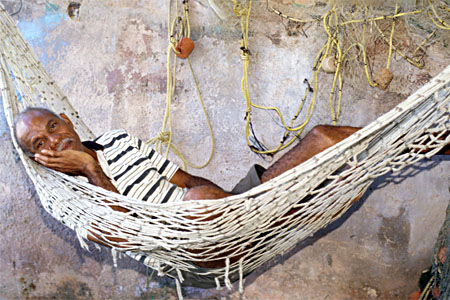
Liming
If you have done it all and need to relax, you can lime with us. Liming is a popular Trinidadian term and means to chill or hangout. It's the art of doing nothing. Come and lime with us!
Copyright © of all photos by Caribsurf.net

|