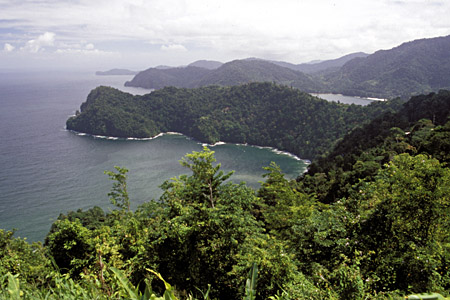
Maracas Bay
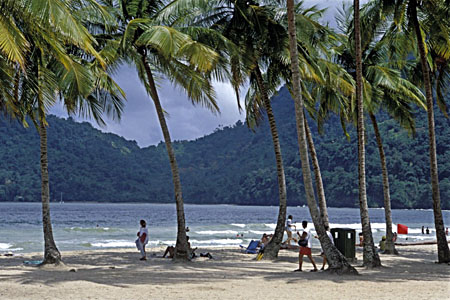
Maracas Beach
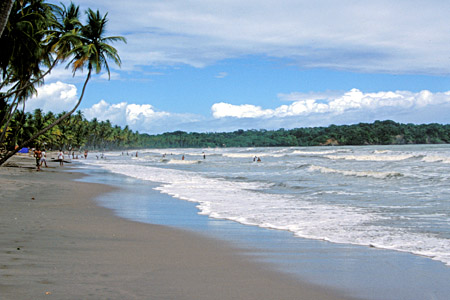
Manzanilla Beach
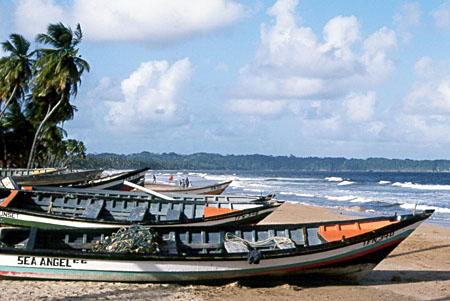
Mayaro Beach
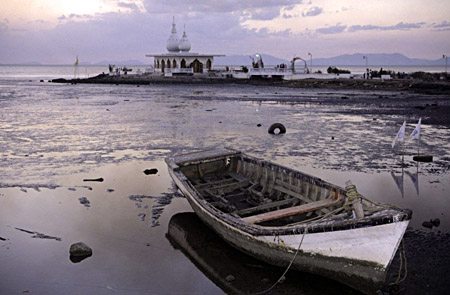
Temple in the Sea
Temple in the Sea
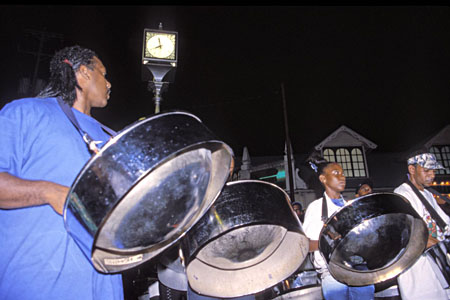
Steelpan Band
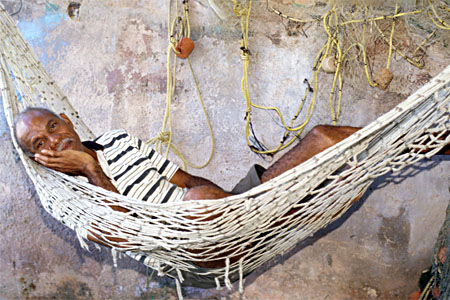
Liming
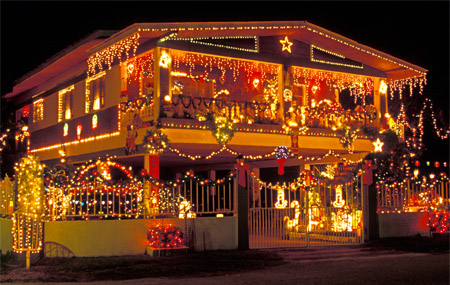
Christmas Time
|
Personal Impressions
Trinbagonians say: Trinidad is nice, Tobago is paradise. I say:
Tobago
is nice, Trinidad is a lost paradise. Unfortunately Trinidad has a high
population density, which causes high traffic, pollution and crime.
Apart
from this Trinidad has a rich cultural life and a splendid nature.
Trinidadians
are very friendly and warm, it's easy to make friends. Trinidad is
probably the most Spanish of the English speaking Caribbean islands
especially in place names. And Trinidad is
one of the cheapest countries in the Caribbean. I highly recommend
Trinidad
to all who are interested in culture, people and nature. For cruise
ship passengers it's best to spend the day at Maracas Beach.
= STRIEWA =
Overview
A large part of Trinidad is covered with tropical rainforest. Because
Trinidad is so close to South America it has many different kinds of habitats
with different kinds of animals. There are 108 mammals, about 450
birds, 55 reptiles, 25 amphibians, and 617 butterflies. Trinidad has more
different kinds of bats than any other place in the world. There are animals
as agouti, anteater, armadillo, ocelot, opossum, iguanas, manatees, paca,
parrots, and monkeys. Endangered leatherback turtles, green loggerhead
turtles and hawksbill turtles nest on the beaches. The sea is full of marine
life.
There are also many different kinds of plants found on the islands of
Trinidad and Tobago. More than 700 kinds of orchids grow there. Other kinds
of trees that grow on the islands include palm, almond, banyan, breadfruit,
flamboyant, cassia, African tulip, silk cotton, matchwood and teak.
Many beautiful flowers grow there such as amaryllis lilies, hibiscus, bougainvillea,
giant anthuriums and heliconias.
The capital Port-of-Spain has a bad reputation, worse than it actually
is, but except for carnival and shopping there is little reason for a
visit. Catch a route taxi in downtown POS and go on a mountainous drive
to the North Coast. North Trinidad is dominated by the mountains of the
Northern Range. There is a lookout point with a fantastic view over Maracas
Bay. North Trinidad is dominated by the mountains of the Northern Range.
The beautiful Maracas beach is the most popular beach in Trinidad and gets
crowded on weekends. A hike along the North Coast is a life time experience.
Take all day and stop at all beaches and pubs.
The beautiful and fascinating countryside of Trinidad is yours to enjoy.
There are majestic forests, misty mountain tops reached by cool, winding
paths, murky swamps, eerie caves and open grassy savannahs. And all around
there is the magnificent coastal scenery of cliffs and headlands, sparkling
sands and rolling surfs. You have the choice of over 30 nature trails.
Enjoy Trinidad to the fullest, immerse yourself in the culture;
explore the nature trails; sunbathe at the beaches; dive the seas; and
shop in the towns and malls. Apart from expanded swamps and mangroves there
are savannahs and unaffected rain forest to be explored.
Attractions
Port-of-Spain
This is the capital of Trinidad and Tobago which starts from the Gulf
of Paria and end back into the foot hills of the rugged Northern Range.
Port of Spain became Capital in 1757 it was a muddy little seaport. Port
of Spain is now one of the busiest commercial centres in the Caribbean
and artistic activity as well. The heart of the city is the downtown area,
with the Queen’s Park Savannah at the northern edge and the Brian Lara
Promenade to the South, linked by Fredrick Street. Port of Spain is where
most of Trinidad activities take places, not forgetting the great City
St James "The Town that never sleeps", but most of the people go to one
special bar which is Smokey and Bunty in St James which remains open
all night, people "lime" until morning. You can always get a
cold drink at Smokey and Bunty any time. It is always crowded and you
can get the smell of a true Trini beer in the air.
The pulse of the city is Independence Square - not really a square
at all, but rather two long streets bordering a narrow pedestrian strip.
The city is crowned by Queen's Park Savannah, once part of a sugar plantation
and now a public park with a race track. Along its west side is the Magnificent
Seven, a line of seven fancy colonial buildings, including Stollmeyer's
Castle, built to resemble a Scottish castle complete with turrets. North
of the Savannah are the Royal Botanic Gardens and the Emperor Valley Zoo.
The Market
The Market is, where you can get fresh fruits and vegetables. Market
usually starts on a Friday and goes to the two big days. Most of the vegetables
are planted by the East Indian. They work hard the whole week in their
garden and when it is time for Market days which is on a Saturday and Sunday
they are there from early in the morning as 5 am preparing their tables
and unloading their trucks with all sorts of vegetables you can imagine. Some
people go to the big market in Port of Spain to buy their goods at
a whole sale price where they get it cheaper. People from all over and
different market vendors come out in their numbers there they leave to
go to different places to sell their goods, Crab you can also see on bunches
hanging with pieces of wire and wrap up in a tight vine so they cannot
get away they are weighed and sold to the people who need it. People crowd
the Market to get the cheapest buy but most of the time the prices goes
down on a Sunday so some people prefer to come out on that day. There is
a lot of noise and shouting by the vendors to get the customers to
buy their goods. There are also people at the side walk of the road most
of them do not have tables but big brown bags where they lay their vegetables,
they try to sell to customers cheaper than the people inside of the Market
place. On Sunday most people go to the Market to buy callaloo bush and coconut
which in Trinidad is a favourite for Sunday lunch. The bush
is a very broad leaf with a long green stem which is being cut up very
fine or blend with other seasoning to make that dish the coconut is being
grated and soaked with water where the husk is being thrown away and the
milk is used in the callaloo. On Sunday family and friends come together
for that special meal of callaloo, crab, red bean, stew chicken and a little
vegetables at the side and if you around you are even invited for a bite.
Asa Wright Nature Centre
A refreshingly cool seven mile drive through the lush greenery of the
Northern Range brings you in direct contact with over one hundred and fifty
(150!) species of birds at Asa Wright Nature Centre.
360
meters up in the Northern Range, the Centre is 200-acre conservation and study
area, catering for both professionals and amateur naturalist and visitors
interested in birds and wildlife. There are eight trails, including the home of
one of the most accessible colony of oilbird, and comfortable accommodation.
Open daily from 9 a.m. to 5 p.m., you also have a guided tour that will give
you a lecture of each bird and take you along to the most beautiful caves
in the islands. The tour starts at 10 a.m. and 1.30 p.m., you have to book in
advance. Admission is low and you can spend as long as you wish at the
Centre where you will be well taken care of. Breakfast and lunch are also
served with the accommodation.
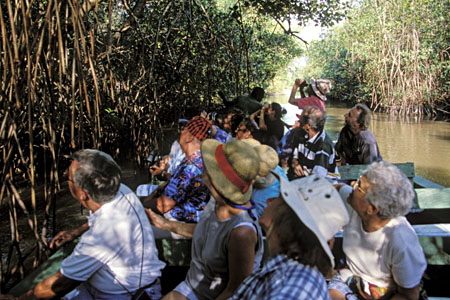
Caroni Bird Sanctuary
You can see the national bird, the Scarlet Ibis, by the hundreds along
with other species at the Caroni Bird Sanctuary. There are also caimans, snakes and fish. A dream place for bird watchers.
Maracas Bay
The views are beautiful and breathtaking as you wind your way over
the Northern Range to Maracas Beach, one of the more popular beaches in
Trinidad. You can excite your appetite here with a tasty "bake ‘n shark",
which is a Trinidadian native dish that consists of deep-fried shark stuffed
in a pocket of deep-fried batter, called "Bake". Please be aware, that
sharks are an endangered species. Wrongly maligned as man-eating monsters,
sharks seldom attack humans, but their populations are being rapidly depleted
by overfishing and other human activities.
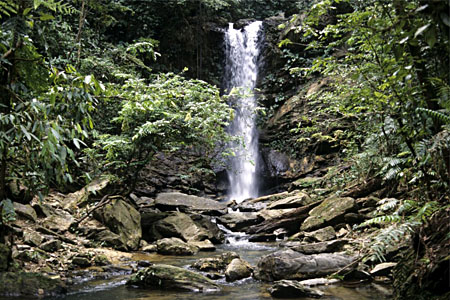
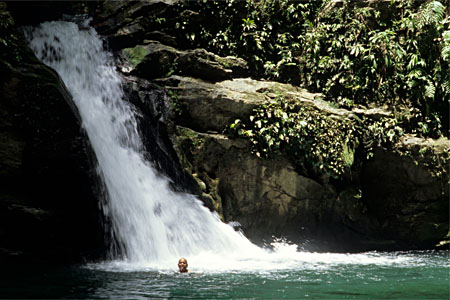
Maracas Waterfall
There are many waterfalls in the northern range. Great picnic areas
and great pleaces for a swim.
The Maracas Waterfall is an easy 2.4 km hike in the Northern Range of
St Joseph, this 91 meter fall is the country’s most popular spot for picnickers,
campers, swimmers and bird-watchers.
Manzanilla Beach
The eastern coastline of Trinidad is rather wild, almost untouched
by man. Manzanilla Beach is about 17 miles long, hemmed with tall coconut
trees, swaying in the constant breeze. Close by is aforrest with wild monkeys.
Mayaro Beach
Mayaro Beach on the east coast is a popular destination for holidays,
long weekends, and is one of the traditional places to spend the Easter
holidays. There is an almost uninterrupted line of coconut trees on the
shore, testimony to the days when most of the area consisted of coconut
plantations.
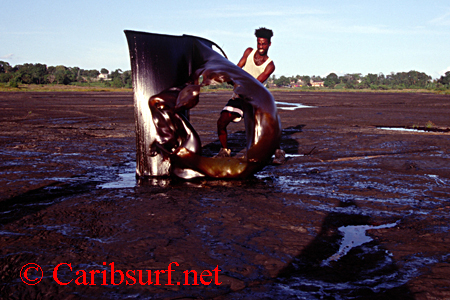
Pitch Lake
The Pitch Lake is the largest natural deposit of asphalt in the world,
located at La Brea in southwest Trinidad. It has fascinated explorers,
scientists and the common folk since its discovery by Sir Walter Raleigh
in the year 1595. The lake covers about 40 ha and is reported to be 75
m deep. It is mined for asphalt which is exported for high-quality road
construction.
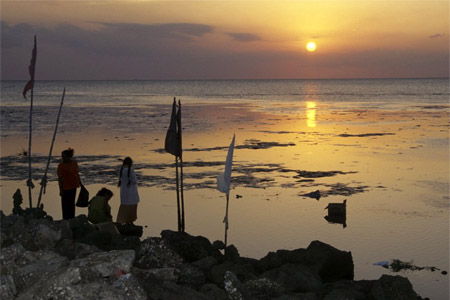
Waterloo Temple in the Sea
The original temple was built single handedly from mud and stone in
the calm shallow waters of the Gulf of Paria by an Indian labourer, Siewdas
Sadhu, whose statue stands in the car park of the rebuilt temple. You
can capture a magnificent sunset on film while you view the Northern Range
across the Gulf of Paria.
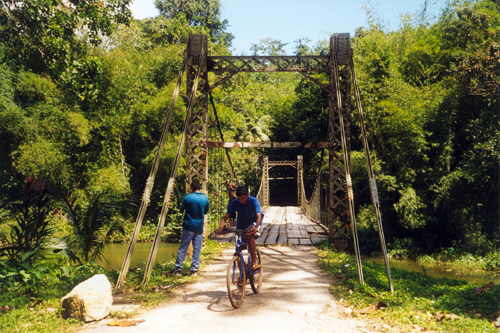
Spring Bridge in Blanchisseuse
One of the oldest constructions in the remote fishing village on the
north coast. Great fun for all to walk across or from which one can dive
into the river.
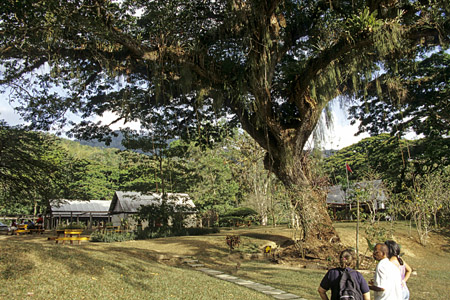
Lopinot
North of Arouca, in the foothills of the Northern Range, at the very
top of the scenic Lopinot Valley, lies a beautiful and unspoilt village.
It is rich in culture, history and wildlife. It also contains one of Trinidad's
best kept national parks, the Lopinot Historical Site. It was here
where the French Army General, the Comte Charles-Joseph de Loppinot, settled
in the 18th century. He came to Trinidad with his wife, children and about
one hundred slaves. Loppinot used the cashew tree which stood on the grounds
as a "hanging tree" for the slaves and imprisoned them underneath the cocoa
house.
Beaches
In Trinidad there are also the beaches with the nice sunsets where
tourists will love to lay in the sand and get a nice suntan colour, some
of the beaches are Manzanilla and Mayaro the two longest beaches in Trinidad.
Miles of sand lined with coconut palms, (it was once an estate land), facing
the Atlantic. The water is rougher than on the West Coast (watch out for
currents), but the space and the Atlantic sea breeze are wonderful. Then
we have Toco, Chagville, Mayaro and Vessigny.
Trinidad’s most famous beach is 35 minutes from the city along a scenic
coastal road. Recent improvements have enhanced both, the beach and its
facilities. Beyond Maracas are Tyrico Bay and Las Cuevas beaches. There
are many other smaller bays along the way.
There you have the best "bake and shark", which is a shark
fillet deep fried and the bake is dough opened out in the hands
of whoever is cooking and toss in the very hot oil where it floats to
the top when cooked and swells like a jelly fish. It is now
ready to be eaten by the hundreds of people that queue up waiting to sink
their teeth in.There is also a table filled with all sorts of vegetables,
tomatoes, pineapple and hot pepper that is made to enhance the taste of
the bake and shark. There is always enough for everyone. You have
to get there first before the long line, Maracas is best known for
its bake and shark.
For those who want to "lime" late there is always something more
to keep you going. Further up the beach there is a Bar where most
people go to have a cold beer or to listen to the wild music that is being
played. You can also see one or two drummers so dance, prance and
have fun it is never too early or too late. Busses or Maxis can take
you to all the beaches and Rivers.
Caves, Bats and Oil Birds
Trinidad
has several caves, most of them are situated in forested areas and can
be reached only by hiking. The Aripo Caves are nestled in the Northern
Range near the village of Aripo. They are known for the nocturnal Oil
Birds (Steatornis caripensis), locally known as the Guacharo. These
are the only nocturnal
fruit eating birds in the world. They forage at night, navigating by
echolocation in the same way as bats, but with a high-pitched clicking
sound audible to humans.
The Gasparee Caves are a natural limestone cave system with a mysterious pool at its base, located on the island of Gaspar
Grande near Chagaramas Bay.
The Cumaca Cave is
a large cave system with three accessible chambers and other
smaller side caves. It is also known as the
Oropouche Cavern and home of the Oil Bird or Guarcharo.
Mud Volcanoes
There
are several areas to visit starting with the Devil’s Wood yard that is
reported to have at least fifty active vents. - See more at:
http://www.trinizagada.com/2009/10/trinidads-mud-volcanos.html#sthash.xJhDcakU.dpuf
There
are several areas to visit starting with the Devil’s Wood yard that is
reported to have at least fifty active vents. - See more at:
http://www.trinizagada.com/2009/10/trinidads-mud-volcanos.html#sthash.xJhDcakU.dpuf
Trinidad
is not a volcanic island, but there are mud volcanoes which are caused
by natural gases in the underground. These volcanoes are sometimes
known locally as "bouffe" (french for swelling), "morne" or "yard." The
original Amerindian inhabitants of Trinidad called these areas guaico,
meaning "mud-stream".
There
are several areas with mud volcanoes starting with the Devil’s
Wood yard that is reported to have at least fifty active vents. The
Piparo Mud Volcano is located in central Trinidad along a road that
leads you all the way to Piparo from the highway exit at Gasparillo.
The area sits on a hilltop and today is covered by grass that is broken
by areas which are bubbling mud.
Offshore Islands
Trinidad’s offshore islands are like another world. When Trinidadians
say to you, they are going down the Islands, this is where they are going.
The nearest is Gasper Grande, also called Gasparee. It is only a short
boat ride from Chaguaramas. It has an easily accessible cave complex as
well as picnic facilities and ruins of colonial fortification. Tour guides
will take you there. They are open from 9 a.m. to 2.30 p.m. on weekdays
and to 3 p.m. on weekends.
Swamps
In Trinidad there are rivers and swamps. The Nariva Swamp is
a Sanctuary for wild life, a haven for the Red Howler monkeys, caiman
and manatee just to name a few. Permits are required for a visit (contact
a reputable tour operator or the Wild field Division of the Forestry Department)
which you can find in the yellow pages of our directory. We move on to
Valencia and the Caura River, where you can take a dip, on weekends
and public holidays. People go to the river to bathe, fish and to enjoy,
what we call a "Trini River-lime". The lime usually starts from early
in the morning where there is a meeting point to the nearest location of
the river. The lime is mostly between family and friends, but you are invited
as our special guest. A Creole dish is prepared and cooked down at
the river side on a make shift stove . Everyone gathers around and sing
and tell funny jokes as the meal is being cooked. The lime ends when there
is no more food and drink but there is usually a lot of delicacies so no
need to rush home. Drink as much as you want, rum is the most popular drink
on a river lime and of course not leaving our women out, there is also
beer which we either buy or mostly take on our own.
Activities
Turtle Watching
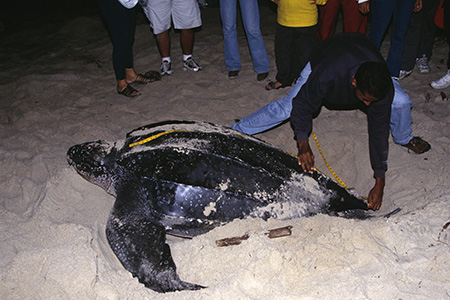
Trinidad is one of the most important lather-back sea turtle
nesting sights in the world. The main nesting season for local sea
turtles runs from March to September of each year. Three of the main
nesting beaches - Matura, Fishing Pond and Grande Riviere - are
Prohibited Areas and permission is required for the purpose of turtle
viewing. Only a limited number of permits are distributed daily, so you
need to ensure that you apply early. During peak season some beaches
report up to 300 nesting leatherbacks in a single night. It's estimated
that approximately 20 percent of the world's leather-back sea turtle
population is of Trinidadian ancestry.
Bird Watching
See our special page about bird watching in Trinidad and Tobago.
Culture
Steelpan Bands
Steelpan is a musical instrument and a form of music originating from
Trinidad. The pan is a pitched percussion instrument, toned chromatically,
made from a 55 gallon drum of the type that stores oil. Steelpan musicians
are called pannists. Arima is home of serveral steelbands.
Parang
Trinidad is best recognized as the land of Calypso and Steelpan, however
during the Christmas season, the music is Parang. Parang is an upbeat Venezuela-Trinidad
hybrid. The word comes from the Spanish word know as "parranda" (action
of merry making, group of serenaders). In Trinidad it refers to folkloric
music of Hispanic American origins. Arima is the home of Parang.
Christmas
Christmas is a very social time in Trinidad with most people having
parties. The radio stations play Trinidadian Christmas carols and also
Parang. Both children and adults go from house to house between neighbours
and relatives for food and drink. Trinidadian Christmas fruitcake is traditional
and is eaten in most homes. The fruits in the cake are usually soaked in
cherry wine, sherry and rum for several months before Christmas! Most people
paint and make repairs to their houses and hang new curtains and decorations
(especially lights) for Christmas.
Liming
If you have done it all and need to relax, you can lime with us. Liming
is a popular Trinidadian term and means to chill or hangout. It's the art
of doing nothing. Come and lime with us!
Text: C. A. Gajadhar
|
Caroni Bird Sanctuary
Paraglyding
Pitch Lake
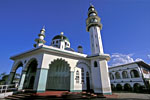
Jinnah Masjid Mosque
Leatherback Turtle
Lopinot
Spring Bridge
Waterfall
Waterfall
|